
Double-side electrode structure
High energy density achieved using a double-side electrode structureAdhesion and sealing structure between pouch film and separator
PRIONE's proprietary adhesion and sealing structure that blocks moisture penetrationBEST VALUE INNOVATION
Hybrid Membrane
Low Mechanical Stability
Limited Electrochemical Performance
→ Next-generation separator technology requiredImproved Flexibility
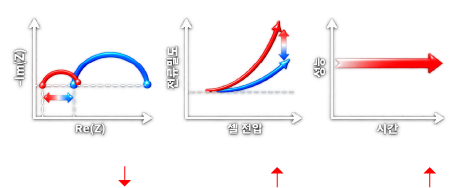
Reduced Stack Resistance
→ Improved Cell EfficiencyMaintains Na⁺ selectivity during charging
Higher performance than conventional
with improved stability
Overcomes the structural and performance limits of the 1st-generation separator
Na⁺ selectivity + stability
Improved productivity and applicability to
next-generation seawater batteries
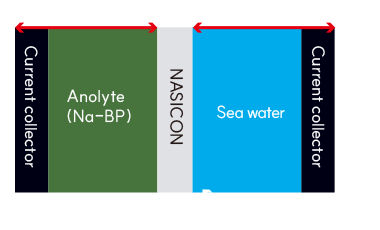
1st-generation seawater battery
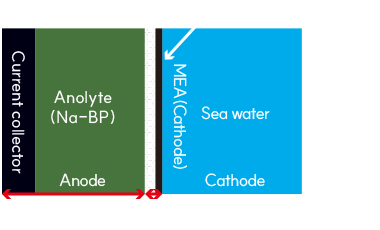
2nd-generation seawater battery
Hybrid Membrane

Brittle
Low durability


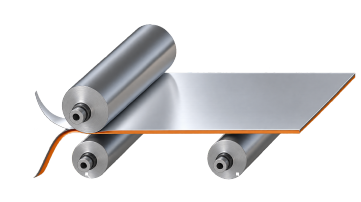
Flexible
Various shapes
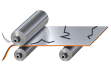
Brittle
Continuous process not possible
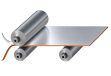
Flexible
Continuous process possible
(Roll to Roll)
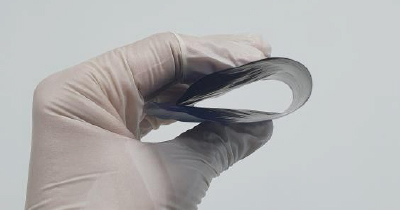

Brittle
Fixed shape

Flexible
Various shapes
Ceramic material
Low adhesion to pouch

Polymer material
High adhesion to pouch
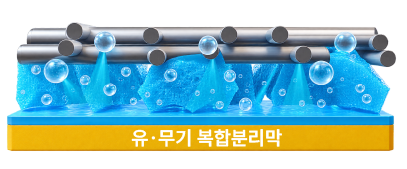
Development of proprietary organic-inorganic composite separator technology that blocks water transport within the cathode while enabling selective Na⁺ transport
Hybrid Membrane
MEA & Cell Structure
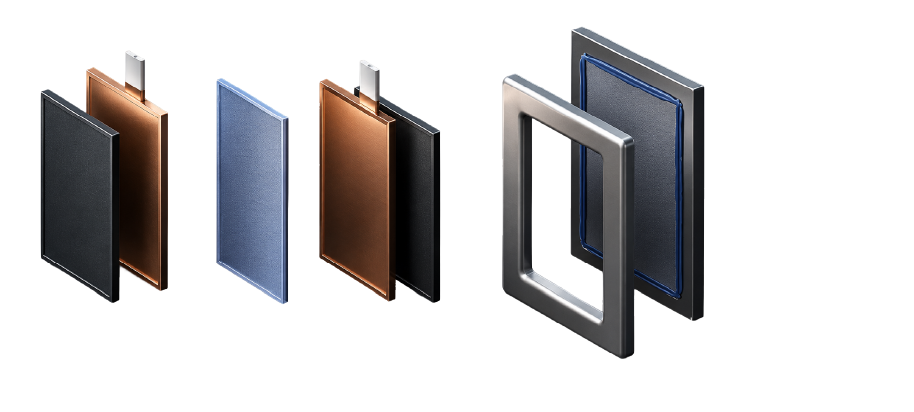
Double-side electrode structure
High energy density achieved using a double-side electrode structureAdhesion and sealing structure between pouch film and separator
PRIONE's proprietary adhesion and sealing structure that blocks moisture penetrationPBA Surface Technology
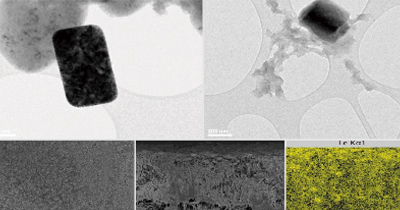
SURFACE MODIFICATION OF PRUSSIAN BLUE ANALOGUE (PBA) NANOPARTICLES
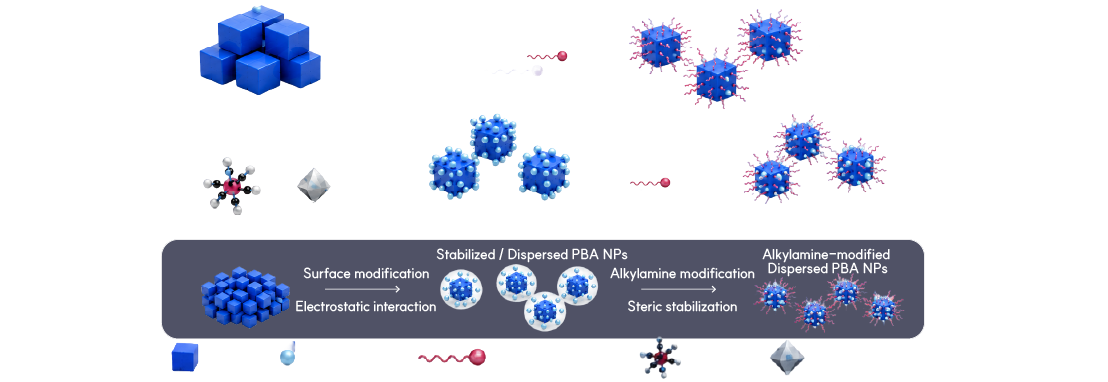
Na⁺ selectivity and ionic conductivity are controlled through the porous lattice structure and surface modification of PBA.
PBA Surface Technology
NASICON + Porous Cathode
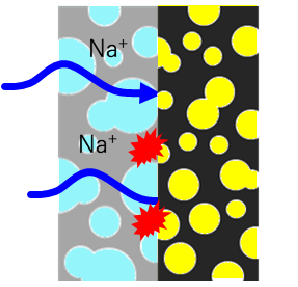
NASICON Porous Cathode
PBA Membrane + Porous Cathode
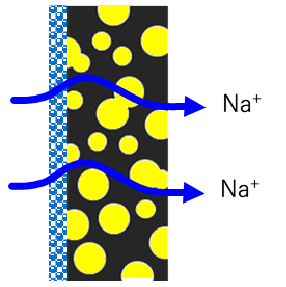
PBA Membrane Porous Cathode
Performance Comparison
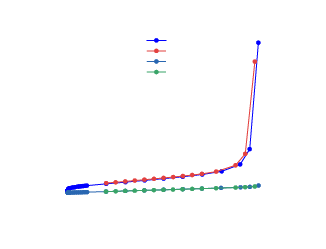
High specific surface area delivers strong
power characteristics, suited to ESS
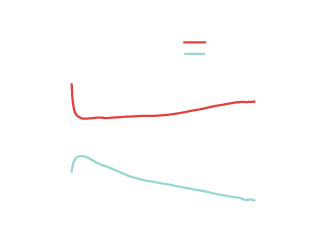
High capacity and cycle-life stability
provide outstanding power efficiency

Capacity retention at high current density and
excellent stability enable use across
a wide range of applications