
Technology
High-functionality materials that determine battery performance
-
Seawater Battery
Seawater battery
-
PLP
Plasma in Liquid Process
-
TMI-Zero Method
Transition Metal Impurities
Plasma in Liquid Process
- Plasma generated
within a solution - Simple device configuration
- Nanomaterial synthesis through
decomposition and recombination
of the solution and electrode materials - Platform Process
Seawater battery
- CHARGING/
DISCHARGING - KEY ADVANTAGES
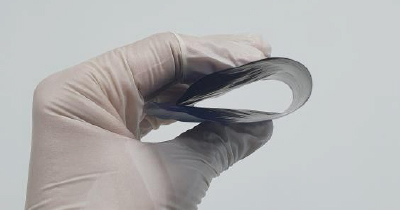
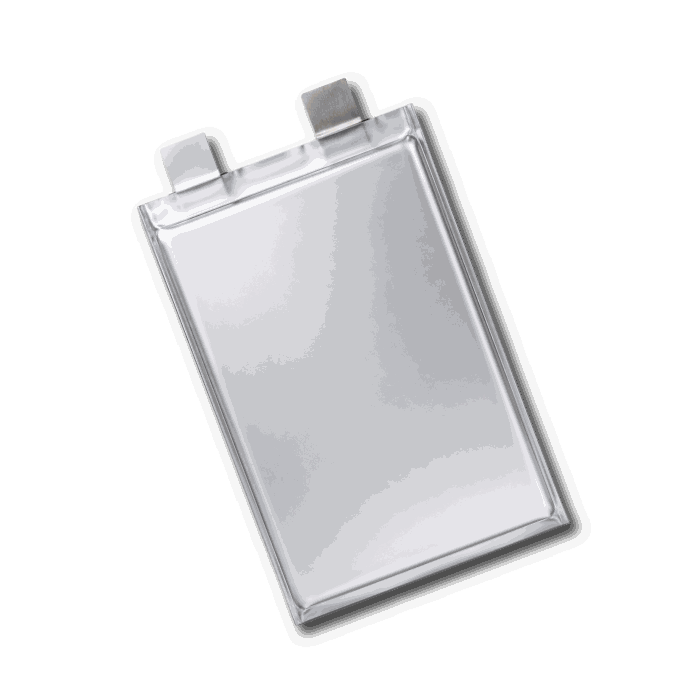
- Pouch Cell
Transition Metal Impuritie
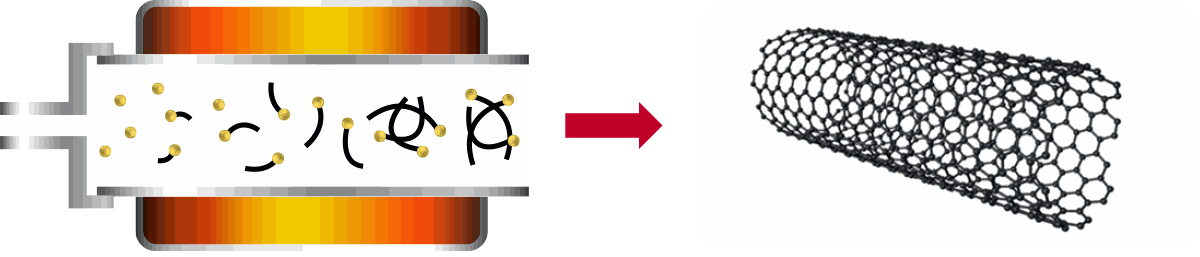
- World's FirstPurification-free Process
- World's FirstCatalyst Impurities 0 ppm
- Low-temperature Process (under 600°C)
- Low-cost Eco-friendly Process
Plasma generated within a solution
Plasma generated within a solution at room temperature and atmospheric pressure
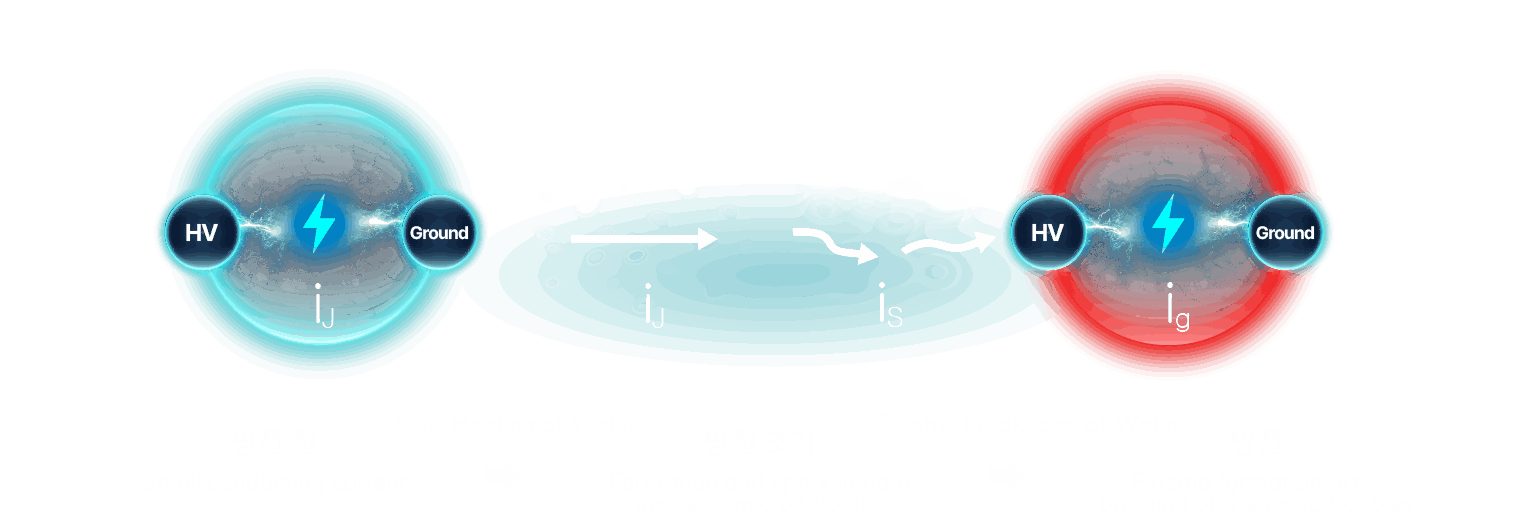
Simple device configuration
Composed only of a power source, electrodes, solution, and reactor
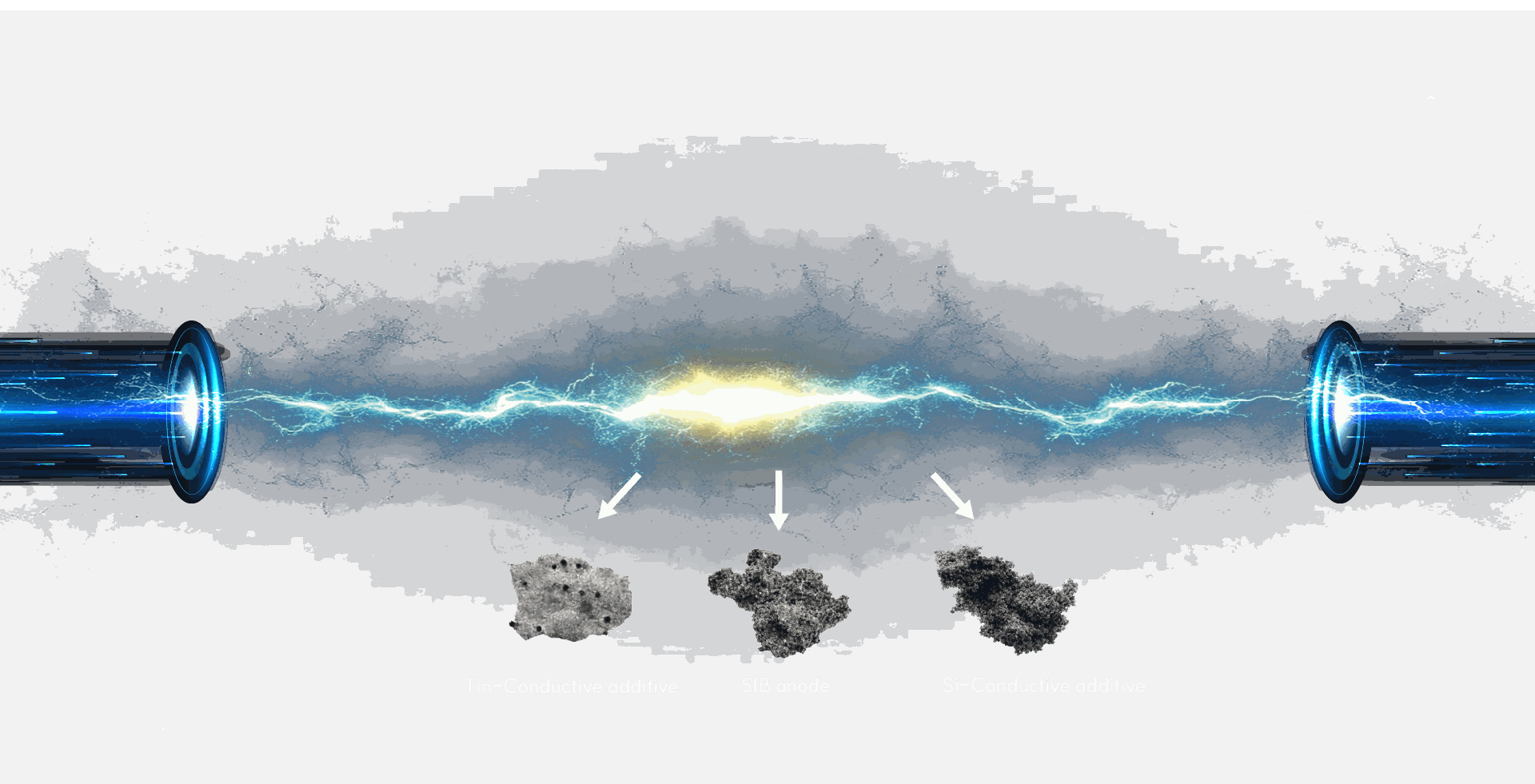
Nanomaterial synthesis through
decomposition and recombination of the solution and electrode materials
Synthesis of various nanomaterials through the decomposition and recombination
of all solvents, solutes, and the electrode wire required to generate plasma
- ex. Synthesis of platinum nanoparticles by
reducing platinum ions dissolved in the solution
with hydrogen radicals generated in the plasma - ex. Synthesis of carbon nanomaterials through
decomposition and recombination of organic solvents - ex. Easy synthesis of metal nanoparticles
by sputtering of the electrode wire
Platform Process
A Platform Process capable of synthesizing various materials with a single PLP process

Synthesis of
Carbon
Nanomaterials
- Carbon black, Heteroatom doped carbon black
- Carbon nano sheet, Heteroatom doped carbon nano sheet

Synthesis of
Metal
Nanomaterials
- Synthesis of metal nanoparticles and metal nano ink by
plasma reduction of any metal that can exist as ions in a solution - Synthesis of metal nanoparticles and metal nano ink by
sputtering of any metal that can be formed into an electrode wire

Synthesis of
Carbon-Metal
Nano Composites
- Synthesis of carbon materials with
metal nanoparticles supported or encapsulated

Surface Treatment
of Carbon Materials
- Dispersion treatment by functional group
modification on the surface of carbon materials such as CNT
CHARGING / DISCHARGING
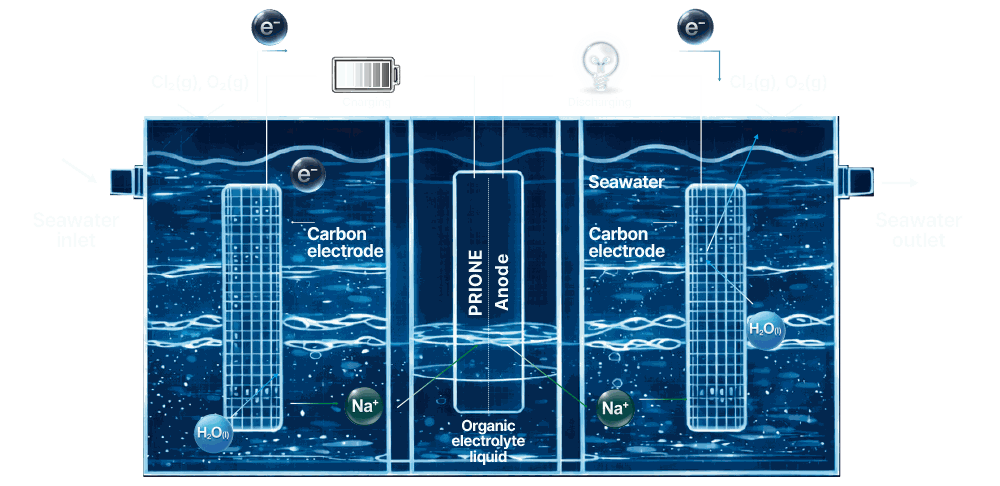
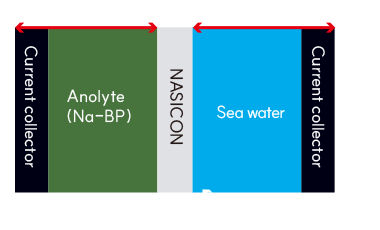
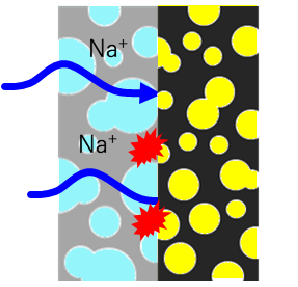
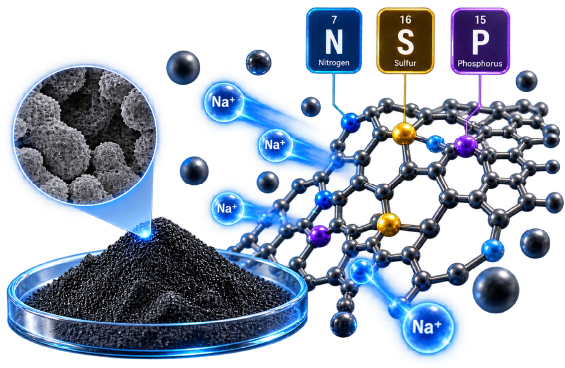
A device that stores electrical energy using seawater as the electrolyte,
utilizing the sodium ions (Na+) in seawater and water
CHARGING
- Utilizes sodium in seawater during charging
- OH- (hydroxide ions) in the seawater produce O2 and H2O,
separating electrons (e-) (OER) - The generated sodium ions move to the anode through the electrolyte
- Electrons (e-) move through the installed wire
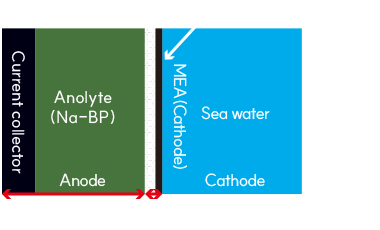
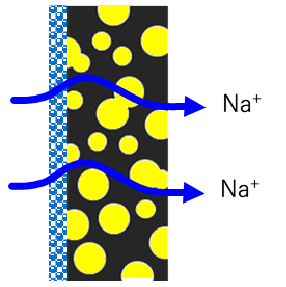
DISCHARGING
- Oxidation occurs at the sodium in the anode,
generating ions (Na+) and electrons (e-) - Sodium ions (Na+) move to the cathode (seawater) through the electrolyte
- Electrons (e-) move to the cathode through the circuit, forming a current
- At the cathode, sodium ions (Na+),
electrons (e-), dissolved oxygen (O2) in seawater, and
H2O combine to produce sodium hydroxide (NaOH) (ORR)
KEY ADVANTAGES
-
Eco-friendly
Seawater-based, minimizing environmental pollution
-
Low-cost
Replaces rare metals, reducing costs
-
High Safety
Low risk of fire and explosion
-
Large-capacity Storage
Capable of long-term, large-scale energy storage
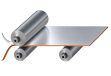
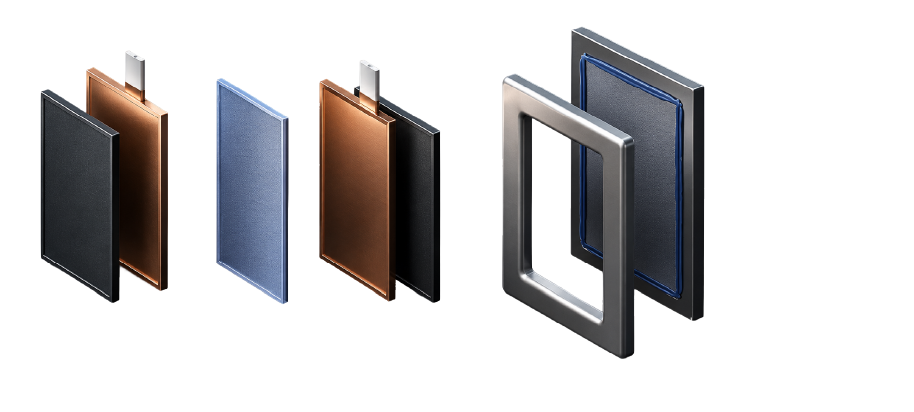
Pouch Cell

-

Increased Productivity
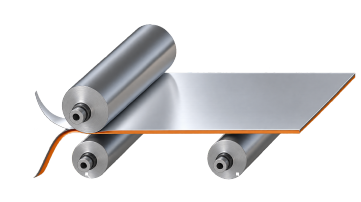
Enables rapid product manufacturing by adopting Roll to Roll technology
-

Uniform Thickness
Maintains a uniform material thickness with constant pressure
-

Continuous Processing
Enables continuous processing using rolls, optimized for mass production
-

Increased Bonding Strength
Forms strong bonding through compression when joining multiple layers of material
World's First
Purification-free Process
-

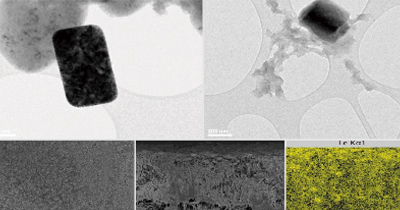
The PRIONE process does not use transition metal catalysts
such as Fe, Co, Ni, and Mo -

Intellectual property rights for catalyst purification
are no longer required
-

As a purification-free process,
a high-temperature reactor using halogen gas
for catalyst purification is not required -

High-concentration acid treatment is also not required,
so no environmental costs are incurred -

Since no purification is performed,
no chemical or structural damage
occurs to the synthesized CNT
World's First
Catalyst Impurities 0 ppm
-

Since no transition metal catalyst is used,
the impurity content from the catalyst is 0 ppm -
0 ppm
PRIONE's special catalyst can be removed
to 0 ppm during the process
-

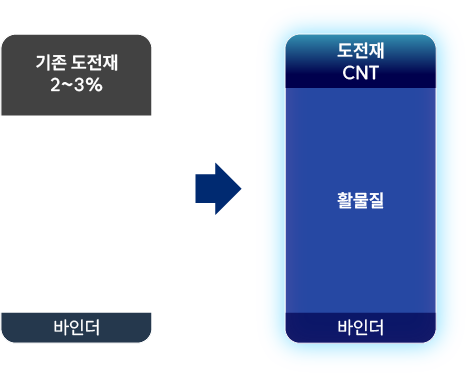
When used as a conductive additive for batteries,
the more PRIONE's special catalyst remains as residue,
the more it greatly contributes to improving battery performance
Under 600°C
Low-temperature Process
-

The advantage of the low-temperature process is
low cost due to low power consumption -

The temperature gradient in the reaction zone is not large,
enabling production of uniform quality
-

When doping hetero atoms such as nitrogen,
because it is a low-temperature process, the doping amount can be greatly increased compared to high-temperature processes,
enabling the manufacture of high-functionality CNT
Low-cost Eco-friendly Process
-

PRIONE's catalyst is very inexpensive, with a precursor price 1/20 that of Ferrocene,
the common CNT catalyst (based on Sigma Aldrich) -

No additional expensive chemicals such as Thiophene
used in conventional CNT processes are needed;
only PRIONE's catalyst and a carbon precursor are required
-

The carbon precursor also uses a very low-cost precursor,
greatly reducing overall production costs, and the reaction temperature is
much lower than typical CNT synthesis temperatures, so less production power is consumed -

Since the purification process is omitted, no purification costs are incurred,
and therefore no environmental costs are incurred














 Ver.KO