PRIONE

BEST VALUE INNOVATION

Materials
SIB Anode

Performance Advantages

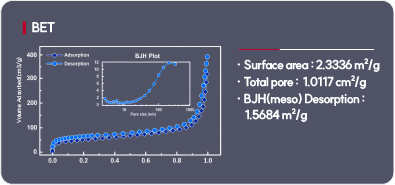
  • High Specific Surface Area

    Securing an abundant active reaction area
    to deliver excellent electrochemical performance.

  • Stable Charge/Discharge Characteristics

    With high initial coulombic efficiency (ICE)
    and excellent cycle characteristics,
    it maintains stable battery performance over the long term.

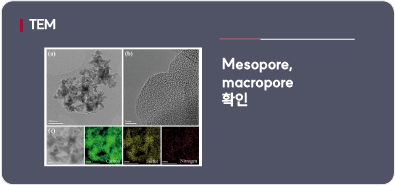
  • Excellent Pore Structure

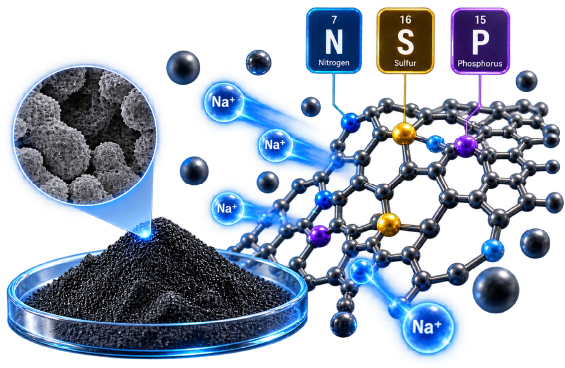
    Through a uniform pore distribution, it facilitates Na⁺
    ion transport, enabling fast
    charge/discharge and high power characteristics.

  • Next-generation Sodium-ion Battery Application

    Applicable to a wide range of Sodium-ion Battery
    fields such as ESS, power storage systems, and
    industrial energy storage devices.

Standard
Carbon black

An anode material based on standard Carbon black, delivering excellent electrochemical
characteristics and stable charge/discharge performance.
It is a standard product line applicable to various Sodium-ion Battery systems

  • Stable Cycle Performance
  • High Carbon Purity
  • Optimized Particle Size
High Capacity
SIB Anode

An anode material achieving high-capacity characteristics of approximately 650mAh/g and higher energy density.
It is suitable for next-generation Sodium-ion Batteries required in high-performance electronic devices that use LIB.

  • High Capacity
  • Optimized Carbon Structure
  • Long Cycle Life

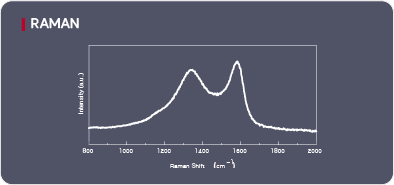
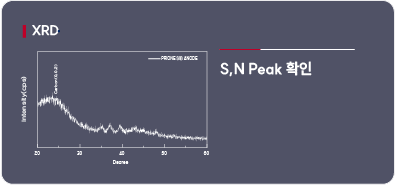
Using the PLP process to easily and uniformly dope hetero atoms, with higher surface area than competitors.

Performance Comparison

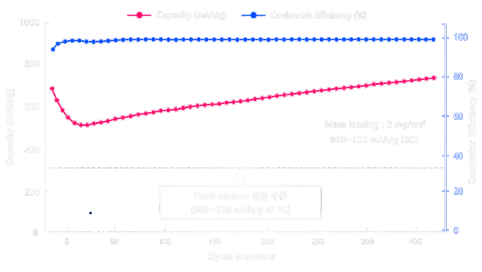
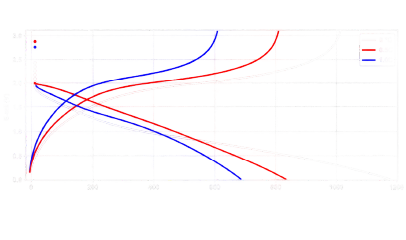
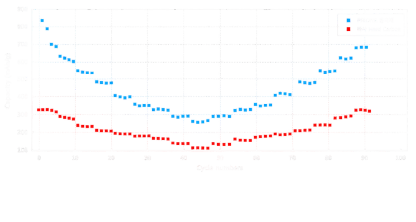
Compared to hard carbon (320 mAh/g at 1C), PRIONE's anode material (695 mAh/g at 3C) exhibits more than double the irreversible capacity. In addition, the initial coulombic efficiency (ICE) is approximately 92-93%, and it maintains a high capacity of about 550 mAh/g even at a high rate of 5C.

Performance Comparison

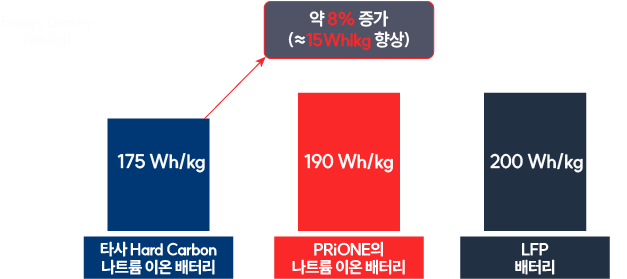
When fabricating a sodium-ion battery cell using a PRIONE anode with a capacity of about 550 mAh/g,
the reduced anode loading improves energy density by approximately 8% (≈15 Wh/kg)

  • Higher Energy Density

    Approximately 8% improvement at the same voltage

    Stores more energy in a smaller volume

  • Reduced Anode Loading

    Reduced anode usage while maintaining the same capacity

    Reduced overall cell weight and volume

  • Improved Battery Performance

    Increased charge/discharge efficiency

    Enhanced system efficiency and competitiveness