
An SIB anode material developed on proprietary carbon materials technology,
delivering stable sodium ion storage and excellent electrochemical performance.
Inquiry
-
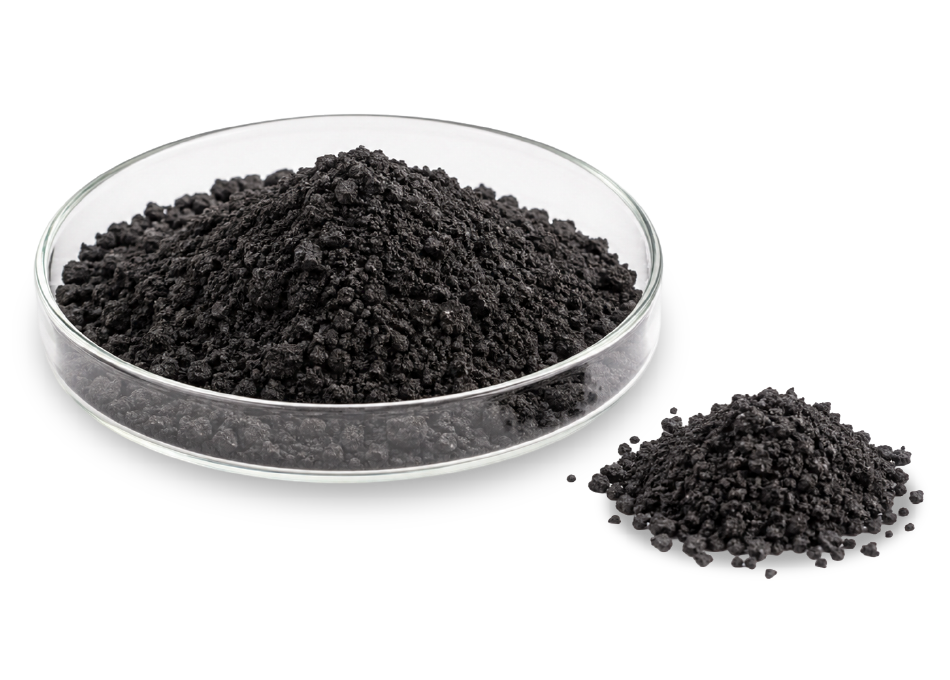
 Product TypeBlack Powder
 -
 Main ApplicationSodium-ion Battery
 -
 Supply UnitDetermined after consultation
 -
 DeliveryNegotiated by order & quantity
 -
 PurchaseQuote & Sample Inquiry

Supports stable sodium ion storage and transport

Delivers stable performance even under repeated charge and discharge

Supports stable sodium ion storage and transport
Product Information
| Category | Details |
|---|---|
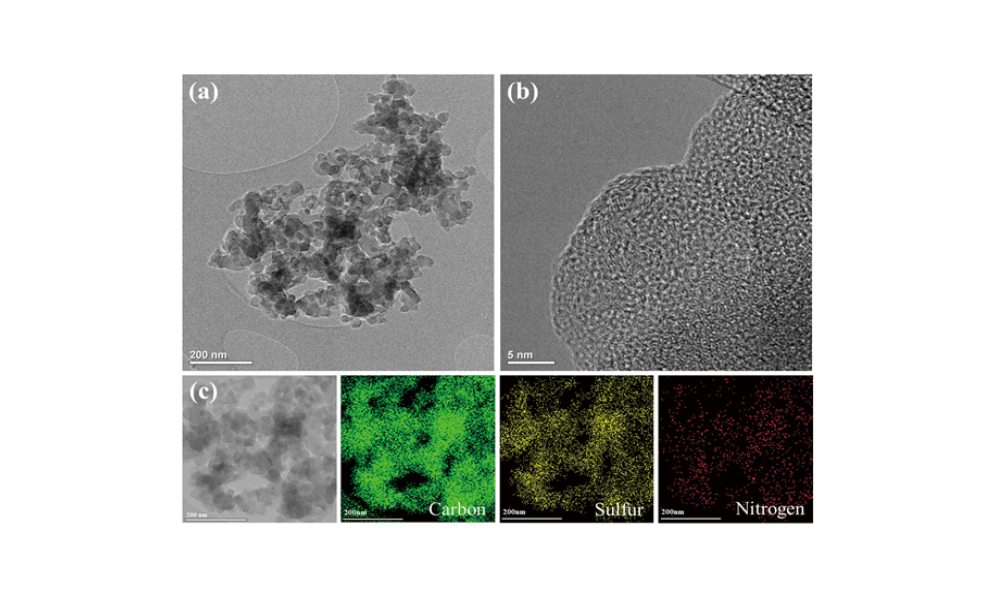
| TEM | Mesopore and macropore confirmed |
| RAMAN | Two peaks of amorphous and crystalline phases confirmed |
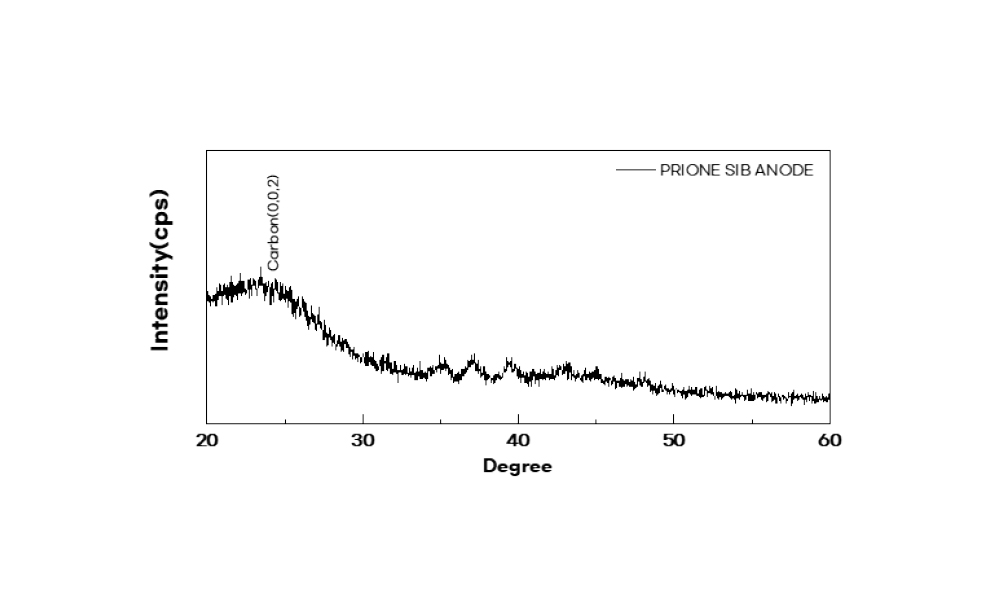
| XRD | Carbon confirmed between 20–30° |
| BET | Surface area : 2.3336 m2/g Total pore : 1.0117 cm2/g BJH(meso) Desorption : 1.5684 m2/g |
| Capacity (1A/g) | 640 mAh/g |
| 1 Cycle Capacity | Charge : 695 mAh/g Discharge : 646 mAh/g ICE : 92.8 % |
| CV | 0–3 V, intercalation and sulfur peaks confirmed |
| C-Rate | 1A/g : 695 mAh/g, 646 mAh/g 92% 30A/g : 300 mAh/g |
Performance Data
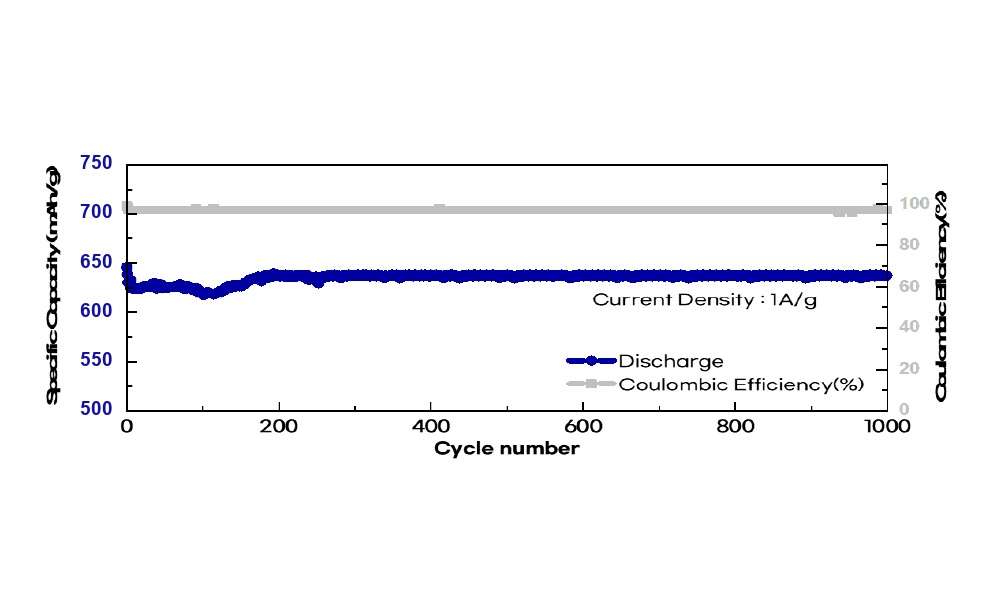
1A/g Cycle test
Repeated charge and discharge testing evaluates the material's capacity retention and long-term stability.
At a current density of 1 A/g, the material stably maintains a discharge capacity of about 640 mAh/g even after 1,000 charge–discharge cycles, and its high Coulombic efficiency confirms excellent long-term cycling characteristics.
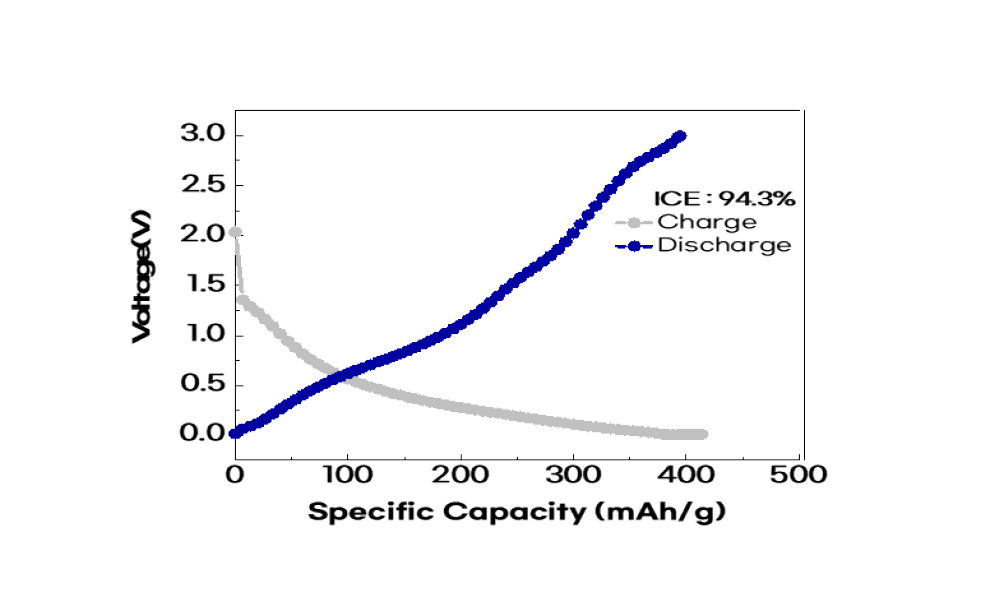
Initial Charge – Discharge Performance
Initial charge–discharge (1st cycle) evaluation confirmed the electrode's initial capacity and reversibility. The material exhibits a high initial discharge capacity and excellent initial Coulombic efficiency (ICE), demonstrating stable sodium storage characteristics.
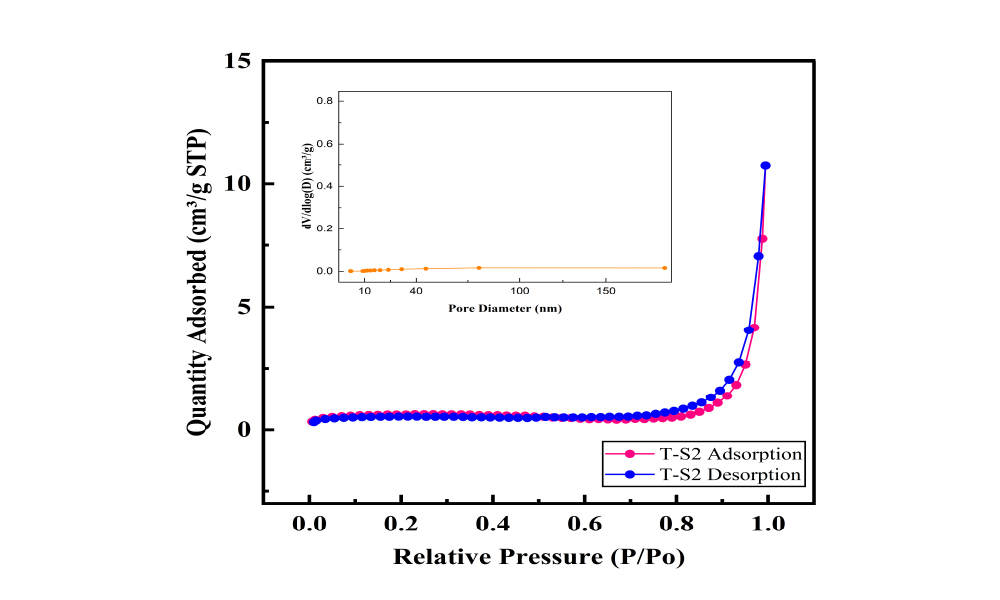
Surface Area & Pore Structure
BET analysis confirmed the porous carbon structure and pore distribution. The uniform pore structure promotes electrolyte penetration and secures ion diffusion pathways, contributing to improved electrochemical performance of the electrode.
Crystal Structure Analysis
X-ray Diffraction (XRD) analysis confirmed that the material has an amorphous carbon-based structure, with a stable carbon framework formed around the (002) crystal plane.
Structural Characterization of Sulfur Nanopowder
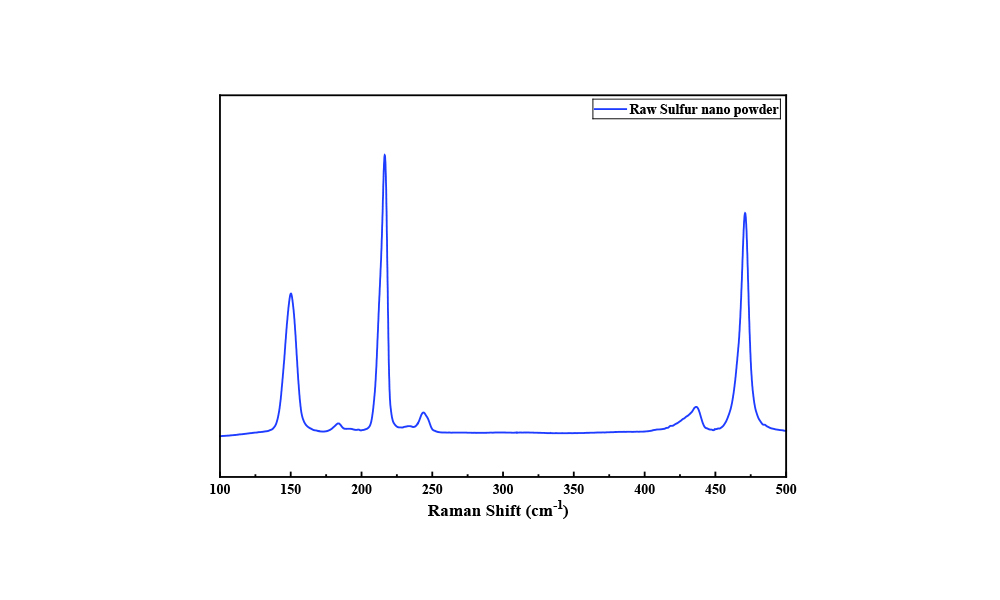
Raman spectroscopy analysis confirmed the characteristic vibrational peaks of sulfur and verified that the crystal structure of the sulfur nanopowder is stably maintained.
Uniform Nanostructure & Elemental Distribution
TEM and EDS mapping analysis confirmed a uniform carbon nanoparticle structure and an even distribution of sulfur and nitrogen. This supports a stable conductive network and enhanced electrochemical properties.
Successful Sulfur Incorporation into Carbon Structure
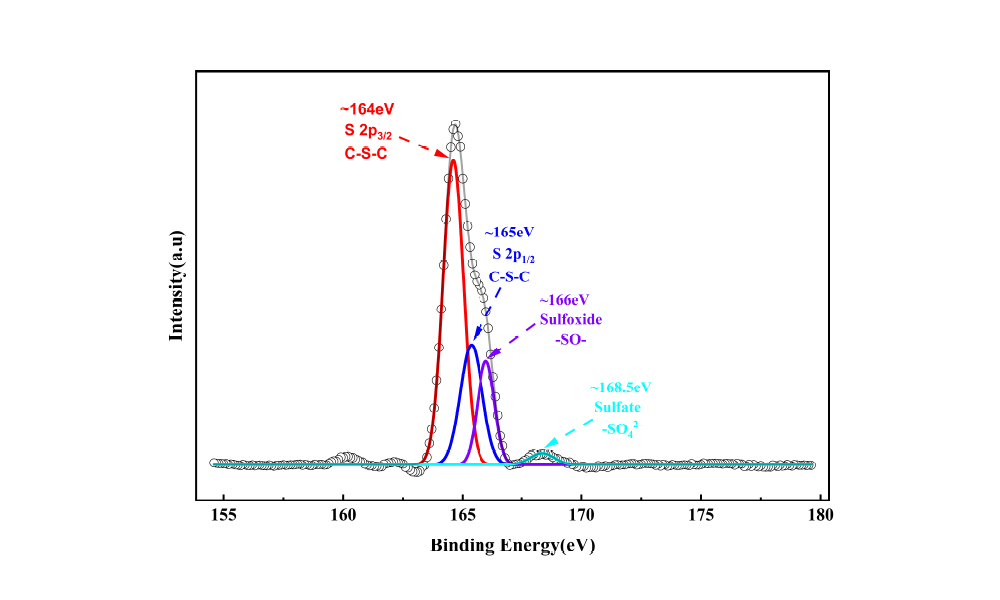
XPS S 2p analysis confirmed the formation of C–S–C bonds and various sulfur functional groups within the carbon network. This surface chemical structure contributes to improved conductivity and enhanced electrolyte interface stability, delivering excellent electrochemical performance.